

From heroic growth to an organization designed to scale
Many companies grow by addition. They add products, markets, people, projects. The organization, however, remains the one from when the company was smaller, or simply different. Decision-making nodes stay concentrated, information flows follow informal channels, alignment depends on goodwill. Every new step adds another layer of complexity, turning the company into a container into which ever more ambitious industrial plans are poured. But the organization of the future can't be the same as yesterday's. It has to be designed.
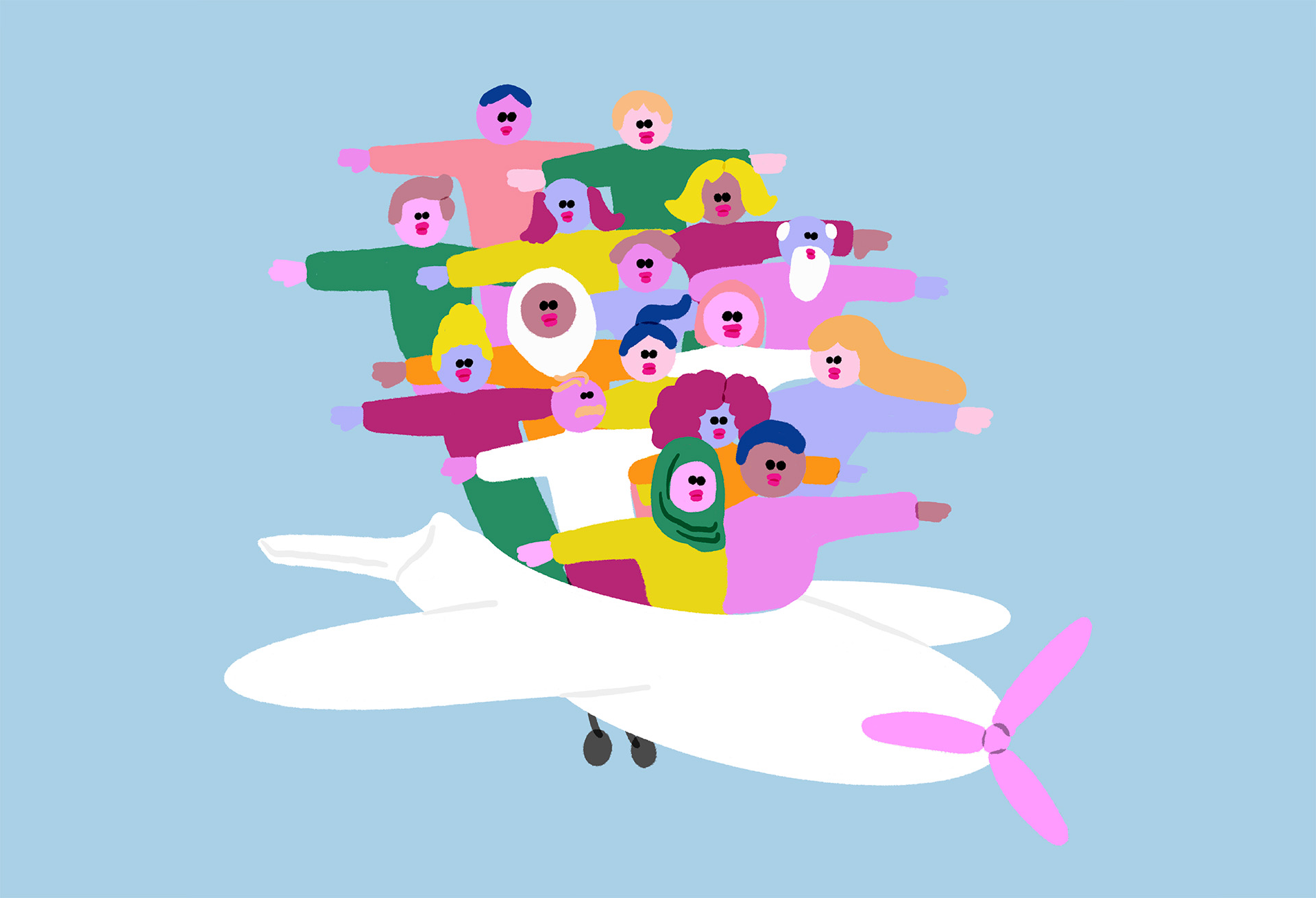
Illustration by Nicole Pavlov for Fine Acts
Start from the processes, not the org chart
Anyone looking seriously at organizational design starts from the processes. They observe how decisions flow, where they get stuck, which handovers generate friction. They analyze how information is shared, what gets made visible and what stays confined in chats and personal files. They listen to those at the points of contact with clients, suppliers and partners, and see under what conditions a decision from the top actually translates into a change in operational behavior.
The org chart is of little use if it doesn't explain why every choice needs a sign-off, why projects run aground in conflicts between functions, or why people burn themselves out trying to hold everything together.
Organizational design as the board's industrial lever
For a board, the point is industrial. A strategy that envisions new markets, investments in technology, and a different role within the chain requires an organizational machine capable of absorbing this level of change without collapsing.
The analyses of organizations that manage to grow in turbulent contexts converge on a handful of characteristics: clarity of purpose, less rigid and more modular architectures, the ability to quickly shift people and capabilities from one front to another, and decision systems that bring those who decide closer to those who see the problems on the ground. Where these conditions are missing, every strategic transformation translates into months of internal friction, slowdowns and rational resistance, because the system isn't designed to change.
When heritage narrows options instead of expanding them
Thinking in design terms means working on three planes that hold together.
The why. It concerns what purpose the organization exists for, and what role it wants to play within its ecosystem. A choice that orients priorities, trade-offs, and the way it relates to those working inside and to those standing outside.
The architecture. How responsibilities and authority are distributed, how many layers of approval are needed to get concrete things done, which teams have a mandate to solve problems end-to-end, and which ones remain enclosed within their functional perimeter.
The day-to-day ways of working. What meetings exist, how data gets used, how operational decisions are made, what happens when a conflict of priorities surfaces.
The typical fractures of unplanned growth
In many Italian companies, the growth of recent years has made certain fractures plain to see. The commercial teams are closer to clients than the support functions that ought to be enabling the promises made in the market. Those developing the product find themselves squeezed between urgent requests and the lack of a shared view on which lines ought to be strengthened. The people with critical capabilities get pulled into every relevant decision and turn into the bottleneck of the system. Digital tools are introduced as additional layers, instead of as an opportunity to rethink processes and responsibilities. The result: a combination of growth and exhaustion. The company produces more, but reaches year-end more tired and with less room to maneuver.
Whoever controls the story controls the perimeter of choice
Organizational design intervenes surgically on these points. It offers a process for reading where the current configuration is no longer holding up, and for building testable alternatives. You start from a handful of simple questions:
Where do workflows systematically jam?
Who is involved in too many decisions, and who, instead, is never called in when they would have relevant information?
Which decisions could be made closer to the client, if the criteria were clear and the data accessible?
Which emerging capabilities can't find a defined space today, because the structure has stayed anchored to a different phase of the company's history?
In recent years, tools have emerged that help make all of this visible: maps of the real organization based on interactions (ONA, Organizational Network Analysis), canvases that break the company down into design building blocks, practices for defining objectives and key results that link strategies and activities in a transparent way.
The point isn't the tool, it's the decision to use it for making decisions.
The point isn't the tool, it's the decision to use it for making decisions.
Once the critical nodes emerge clearly, the board can no longer treat the internal workings as a secondary variable next to market, product and finance. It has to decide whether to invest in redesigning roles, processes and decision levels, and at what depth.
The discussion enters the board's agenda in a different shape from the generic "let's change the culture." It becomes a series of concrete choices.
Establishing which responsibilities and which decisions are to be shifted from the top to operational teams, and within what limits.
Identifying which strategic processes need to be redesigned, because they no longer work under current conditions.
Assessing which capabilities are needed to sustain a more distributed setup, and which development paths are needed to prepare those currently in key roles for new ways of working.
Defining what use is to be made of internal data, including with the help of artificial intelligence, to monitor workloads, collaborations, and process throughput times.
Organizational design as a lever for risk governance
From this point of view, organizational design is a lever for governing both risk and potential.
An organization that keeps growing through stratification, without redesigning the way it works, accumulates organizational debt. In the short term it can look efficient, because it squeezes the most out of the people who actually function. In the medium term, this apparent efficiency turns into vulnerability. All it takes is the departure of a few key figures, a change of context, or a supply-chain crisis, and the bottlenecks blow up.
An organization designed to change takes care to codify processes, spread decision-making capabilities, and build healthy redundancy around critical competencies. Design becomes a way of redistributing energy and responsibility.
Good design reduces the volume of trivial decisions that climb to the top, and frees up time for the genuinely strategic ones. It allows those with capabilities close to the client, to production, or to product development to intervene earlier and better. It makes the perimeter within which each person can move both debatable and clear. It introduces the habit of periodically reviewing the setup, the way you review product portfolios and positioning.
The question for the board: how designed is our organization?
For a board looking at the next five to ten years, the issue is straightforward.
Is the growth plan we're discussing sustainable for the organization as it stands today?
What signals are telling us that, as volumes, supply-chain complexity, use of technology and client demands all grow, our way of working risks becoming the main constraint?
How much of what we attribute to the market actually depends on an internal machine designed for another era?
At TIPIC, we'd suggest bringing this question to your next board meeting: how much of our organization has been designed, and how much has grown by accumulation, and what do we need to redesign today to make it truly capable of supporting the strategic and organizational choices we're putting on the table?