

Understand the dynamics that influence the system in which we operate
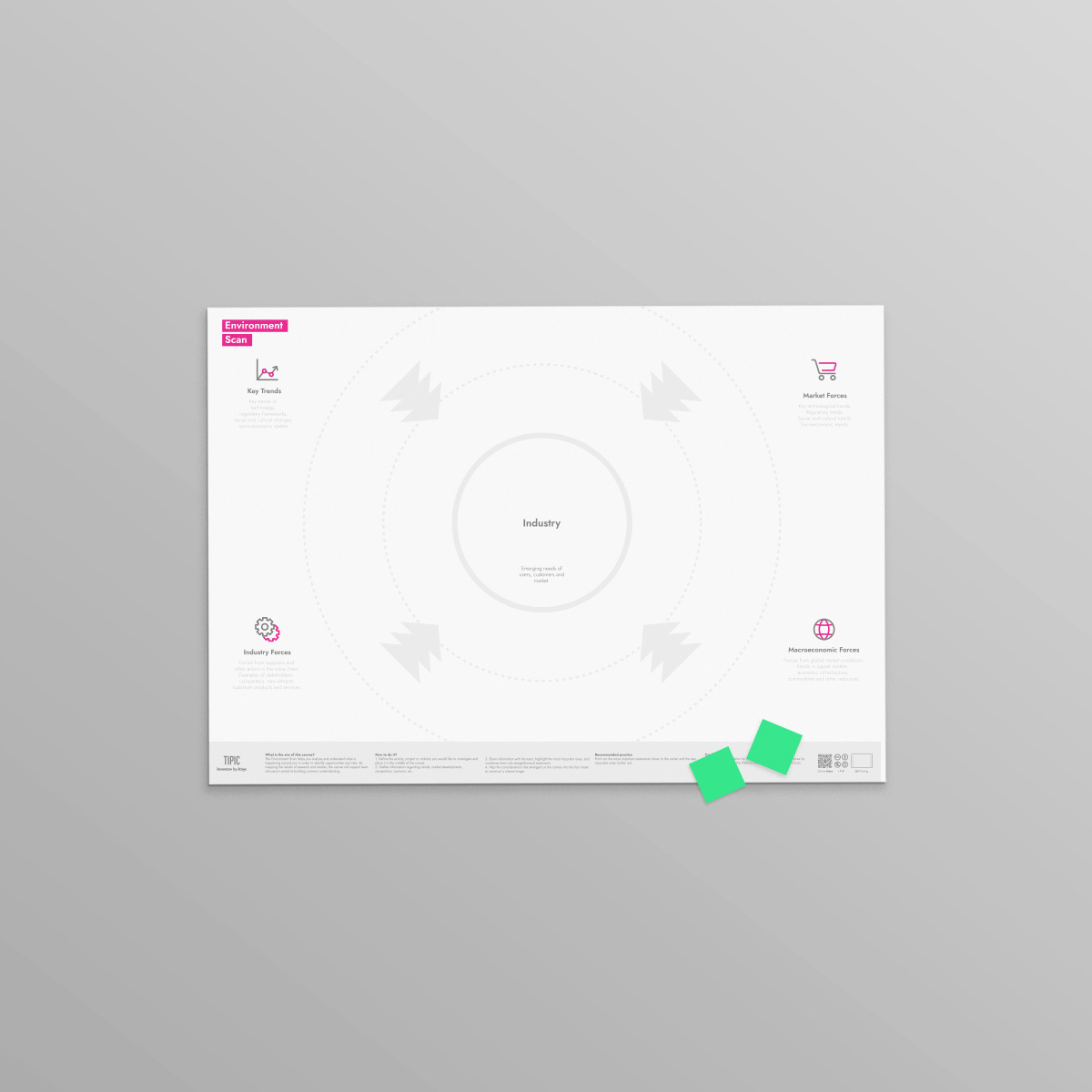
The Environment Scan helps to analyse and understand what is happening around us to identify opportunities and risks. By mapping the results of research and studies, the canvas will support deeper team discussion to build common understanding.
The dynamics and interactions of an ecosystem provide us with the coordinates to move and position ourselves strategically within it
How to use the Environment Scan canvas
1. First step
Define the business, project or sector you wish to investigate and put it at the center of the canvas.
2. Second step
Gather information about trends, market developments, competitors, opinions, etc.. and place them in the center around the industry definition.
3. Third step
Share the information with the team and highlight the most important ones and summarise them into clear statements.
4. Fourth step
Map the considerations that emerged on the canvas into the four areas to build a common picture, categorizing them by:
• Environment; the emerging forces that shape the environment with which your sector relates socially, economically, and environmentally.
• Sector actors; the emerging forces expressed by the stakeholders in your sector.
• Macroeconomic forces; the emerging forces that characterize the macroeconomic context, i.e., natural and geopolitical fiscal issues that influence the world and have a direct or indirect impact on the environment.
• Market forces: the emerging forces that characterize the market in which you move.
• Sector actors; the emerging forces expressed by the stakeholders in your sector.
• Macroeconomic forces; the emerging forces that characterize the macroeconomic context, i.e., natural and geopolitical fiscal issues that influence the world and have a direct or indirect impact on the environment.
• Market forces: the emerging forces that characterize the market in which you move.
Is this tool right for you?
Tell us about yourself and try it!