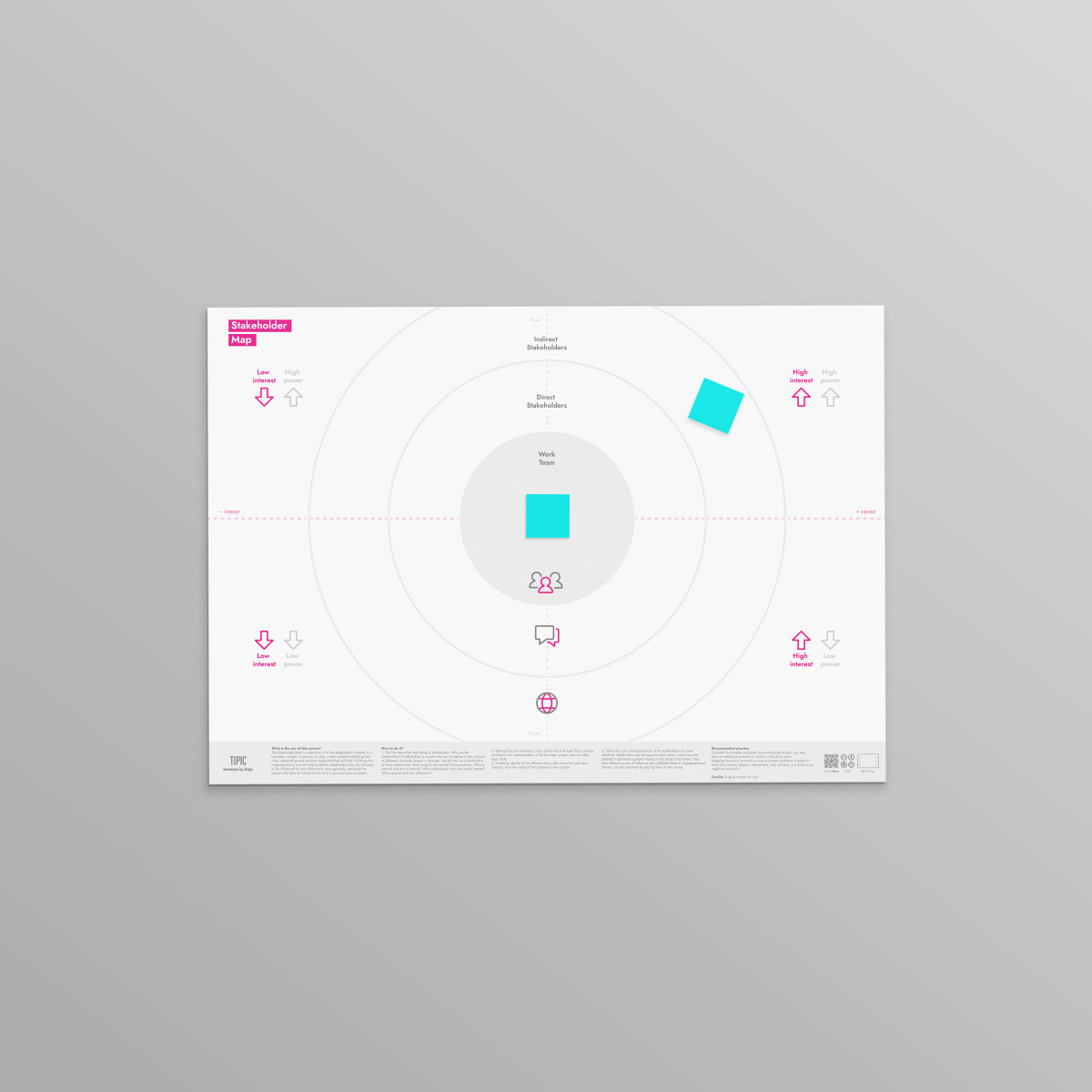


Understand the players who influence the system in which we operate
The Stakeholder Map is a representation of all the stakeholders involved in a project, aimed at clarifying roles and relationships. Doing this mapping activity helps to identify non-obvious subjects among those who may influence or be influenced by our activities and, more generally, among all the people who have an interest of any kind in the project we are implementing.
Building a common and shared vision of the people we directly or indirectly involve in our project is the first step to identify the value exchanges in the ecosystem
How to use the Stakeholder Map canvas
Use this tool as a combination of the three views that are often used to map stakeholders. To map the actors try asking yourself these questions: Who is external and who is internal? Who wields power and who exercises interest? Who supports and who influences?
1. First step
Starting with the innermost circle, define the work team that is directly affected by the day-to-day implementation of the project;
2. Second step
Identify as you go along all the various functions with which the team interacts, from inside the company to outside.
Is this tool right for you?
Tell us about yourself and try it out!