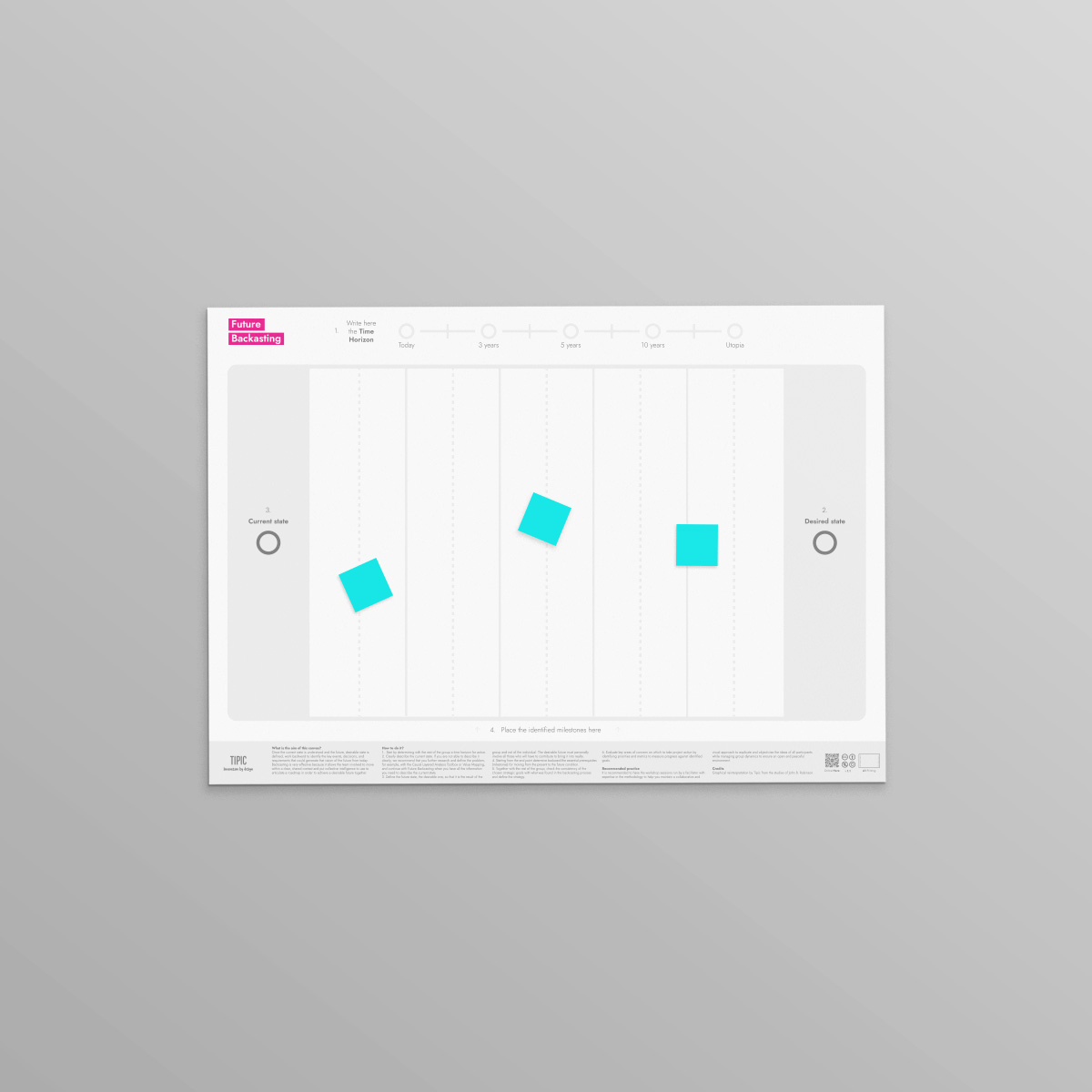


Future backcasting helps to identify what strategies, goals, policies, and programs are needed today to connect the future to the present
Once the current state is understood and the future, desirable state is defined, work backward to identify the key events, decisions, and requirements that could generate that vision of the future from today. Backcasting is very effective because it allows the team involved to move within a clear, shared context and put collective intelligence to use to articulate a roadmap in order to achieve a desirable future together.
From the future to the present in understanding today's actions that enable you to achieve the tomorrow you want
How to use the Future Backcasting canvas
1. First Step
Start by determining with the rest of the group a time horizon for action.
2. Second Step
Clearly describe the current state by defining what your situation is today or what is the problem you are facing. If you have not already done so, you may find the Causal Layered Analysis Toolbox or the Value Mapping helpful.
3. Third Step
Define the future state, the desirable state, in a way that personally involves everyone who will have to contribute to bring it into reality.
4. Fourth Step
Starting from the desired future, determine backward the essential prerequisites (milestones) for moving from the present to the future condition.
5. Fifth Step
Check the consistency of the chosen strategic goals with what emerged in the backcasting process and define the strategy with the rest of the participants.
6. Sixth Step
Evaluate key areas of concern on which to take project action by identifying priorities and metrics to measure progress against identified goals.