
The problem of many solutions is not having a clear definition of the problem
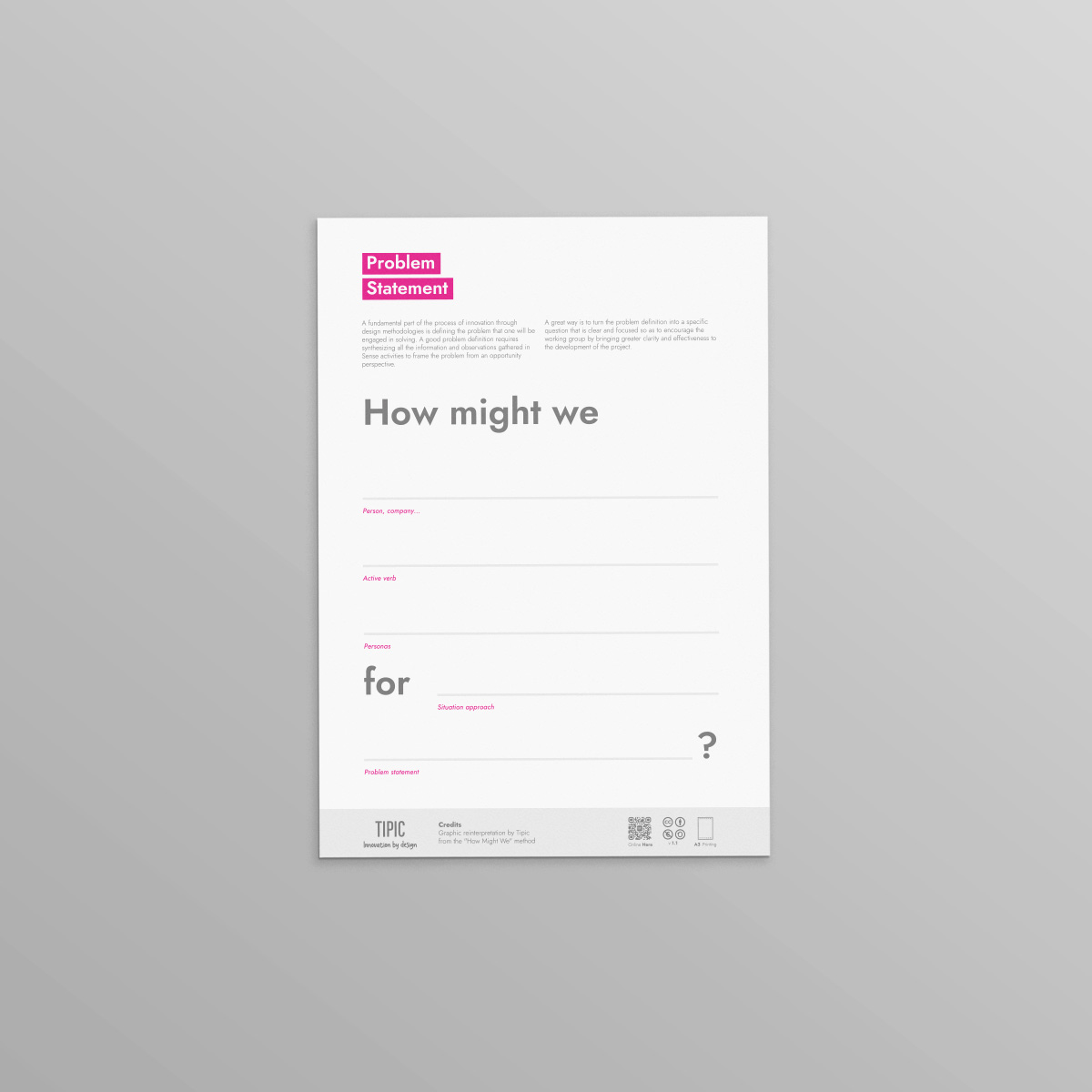
A fundamental part in the process of innovation by design is the definition of the problem to be solved. A good problem definition requires synthesising all the information and observations gathered in sense making activities to frame the problem from an opportunity perspective. A good way is to turn the problem definition into a specific question that is clear and focused. This encourages the working group by bringing more clarity and effectiveness to the project development.
If I had an hour to solve a problem, I would use 55 minutes to think about the right question and 5 minutes for solution.
How to use the Problem Statement
1. First Step
In order to go deep and identify the underlying elements of a problem before determining its definition, a recommended exercise is trying your hand at CLA analisys using the CLA Problem Definition Canvas.
2. Second Step
Once you have defined the problem in its nature, use the How Might We (HMW) technique to frame it into a specific question.