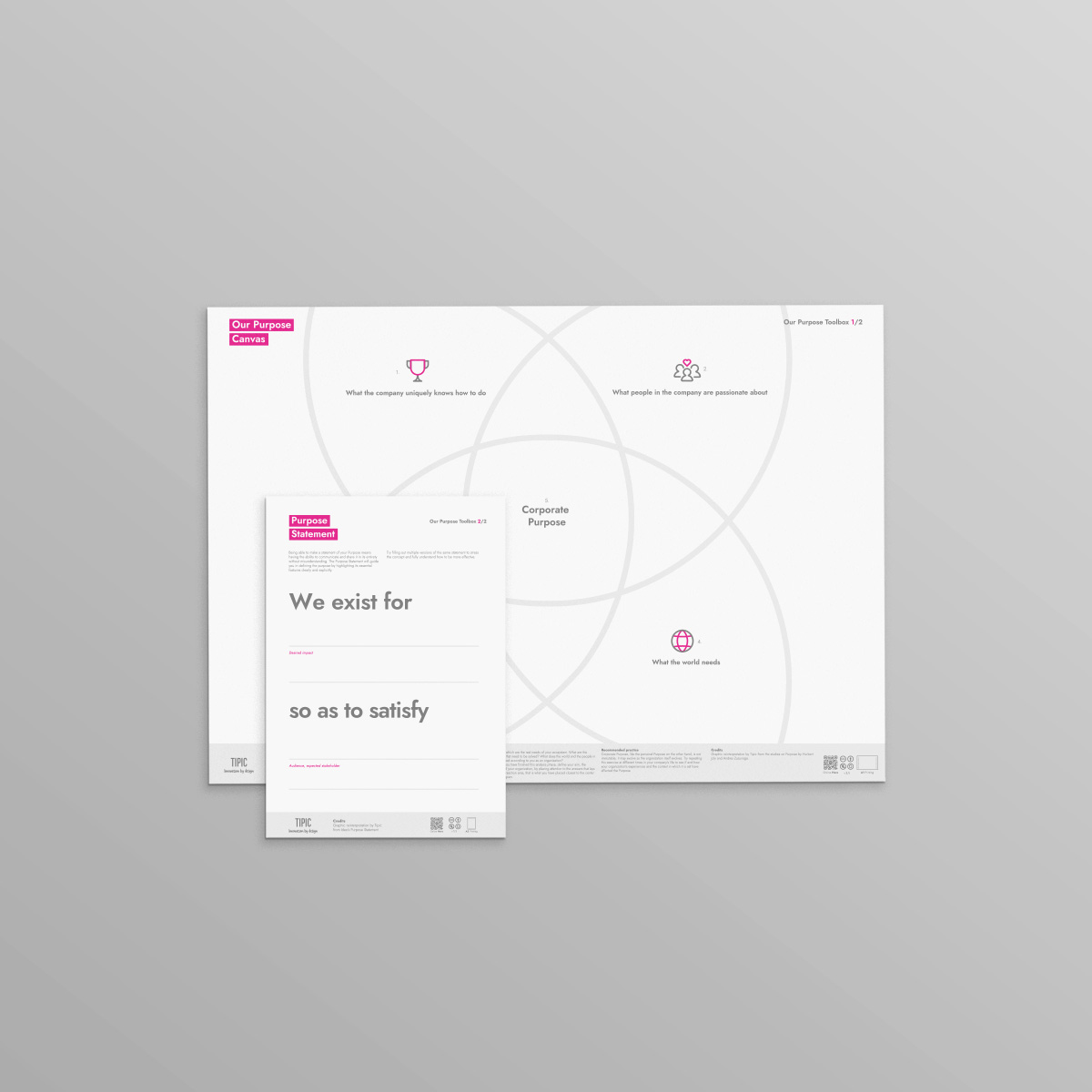


Knowing our purpose to build a desirable future consistent with our capabilities
Corporate Purpose identifies the "reason why" of the organization and the people within it. That deep meaning that motivates a team by driving it to concrete and cohesive action. Carrying out this exercise will help you define your common purpose as a motivational drive that engages people toward a common goal.
A preliminary action to this esercise can be to map behaviours and values of an organisation.
Understanding your reason why is the starting point for a meaningful strategy that will let you to reach your desirable futures.
How to use the Our Purpose Toolbox
1. First Step
If you have it, use the results of the My Purpose Canvas to reflect on what the people from your organization are passionate about.
Therefore define what, as a company, you uniquely know how to do. Investigate how the company creates and can create economic value. Outline what the real needs of your ecosystem are. The answers you have found will allow you to compile the intersections between the four main areas of the canvas.
2. Second Step
Define the purpose through a statement that is clear and explicit.
The Purpose Statement will guide you in defining its essential features; it is a great tool for engagement at the organizational as well as personal level. Being able to make a statement of your Purpose means you have the ability to communicate and share it in its entirety without misunderstanding.