
Questo testo è responsive

Behaviours – Values Toolbox

Comportamenti e Valori Toolbox

Behaviours – Values Toolbox

Designing Organizational Culture: aligning behaviors and values to shape the future.

Your company culture is the invisible operating system that determines the success or failure of every strategy. Often, organizations endure their culture instead of designing it. The Behaviors and Values Toolbox is the tool for mapping your organization's DNA and ensuring it is consistent with the futures you want to realize.
Don't just declare values: identify the actual behaviors that fuel them or, conversely, act as hidden barriers to change. This tool is a prerequisite for defining your Purpose and will allow you to transform corporate culture from a static limit into a dynamic engine of innovation and authentic competitiveness.
Values are declared, behaviors are practiced. Design today the culture capable of sustaining tomorrow's futures.

How to use the Behaviours – Values Toolbox

Fase 1: Map real behaviors (The Mirror)

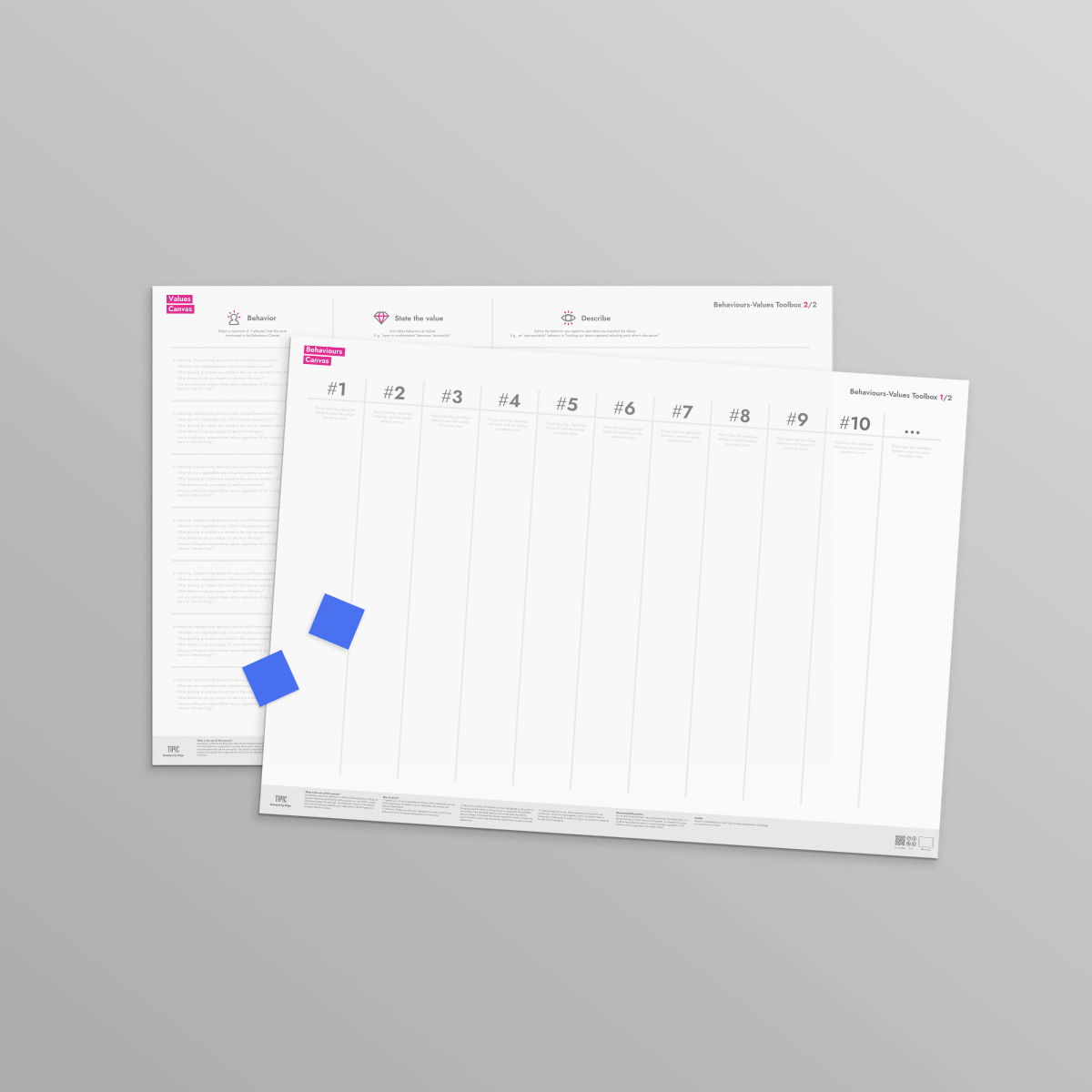
Work as a group to identify the character traits and daily actions that define your team's success with stakeholders and as a working group. Ask everyone to declare and explain the core behaviors that characterize the organization in its actual activities, without filters.

Fase 2: Extract authentic values (Deep DNA)

Use the Values Canvas to group the emerging behaviors for semantic coherence. From these groupings, extract the deep values that fuel them: only then will your corporate values be rooted in reality and not just in external communication.

Fase 3: Strategic Alignment.

Evaluate whether current values and behaviors are ready to sustain the challenge of new markets. This step will allow you to identify what to preserve and what to evolve to ensure continuity and relevance over time.

Frequently asked questions about the Behaviours – Values Toolbox

What is the Behaviours – Values Toolbox?

It is TIPIC's tool for mapping an organization's cultural DNA: starting from the real behaviours practised every day, it surfaces the authentic values that fuel them. It helps you design company culture instead of enduring it, checking that it is consistent with the futures you want to realize.

Why map behaviours and values?

Culture is the invisible operating system that determines the success or failure of every strategy. Mapping real behaviours reveals what fuels change and what acts as a hidden barrier, turning culture from a static limit into an engine of innovation. It is also the preparatory exercise for defining corporate purpose.

How do you use the Behaviours – Values Toolbox?

Three phases: map as a group the real behaviours that define the team's success, unfiltered (The Mirror); cluster them by semantic coherence and extract the deep values that fuel them (Deep DNA); finally, assess which values and behaviours to keep and which to evolve to sustain the challenges of new markets.

What is the difference between declared and authentic values?

Declared values are the ones communicated externally, often chosen at a desk; authentic values are the ones rooted in the organization's daily behaviours. Values are declared, behaviours are practised: only by starting from what people actually do can you build a credible culture, inside and outside the company.

Where can I download the Behaviours – Values Toolbox?

You can download TIPIC's Behaviours – Values Toolbox for free from this page, in English and Italian, with the Values Canvas and the guide to move from observed behaviours to authentic values.
Is this tool right for you?
Tell us about yourself and try it!

    My name isand I am currently working at. Please send me a copy of your Behaviours–Values Toolbox at my email. Thank-you!
    Back to Tools
    1200 1200 Tipic
    Privacy Preferences

    When you visit our website, it may store information through your browser from specific services, usually in the form of cookies. Here you can change your Privacy preferences. It is worth noting that blocking some types of cookies may impact your experience on our website and the services we are able to offer.

     
    You can find more information here:
    Our website uses cookies, mainly from 3rd party services. Define your Privacy Preferences and/or agree to our use of cookies.